Fahrenheit 451
Notes from the score:
This opera attempts to capture both the specific 1950s stylizations of the time in which Fahrenheit 451 is written, and the broader, more universal idea of total technological control and dependence. It does not necessarily exist in the current future, or modern day. The fremen are macho, chummy-yet-bullying types when off-duty, and soldiers
when on-duty. The civilians are brain-dead, happy, blood-thirsty, and entirely disconnected. The advertisors and TV characters are slick, charming, and ultimately predatory. The TV reality should feel almost like a part of the real reality – incipid, stylized, entirely without genuine life to it, yet with a faux-inviting quality. The opera is designed, in part, to feel as though it is being experienced as something of a traumatic series of episodes: the scenes are mostly linear, but should feel like they follow each other too quickly, and rarely with enough time to process them.
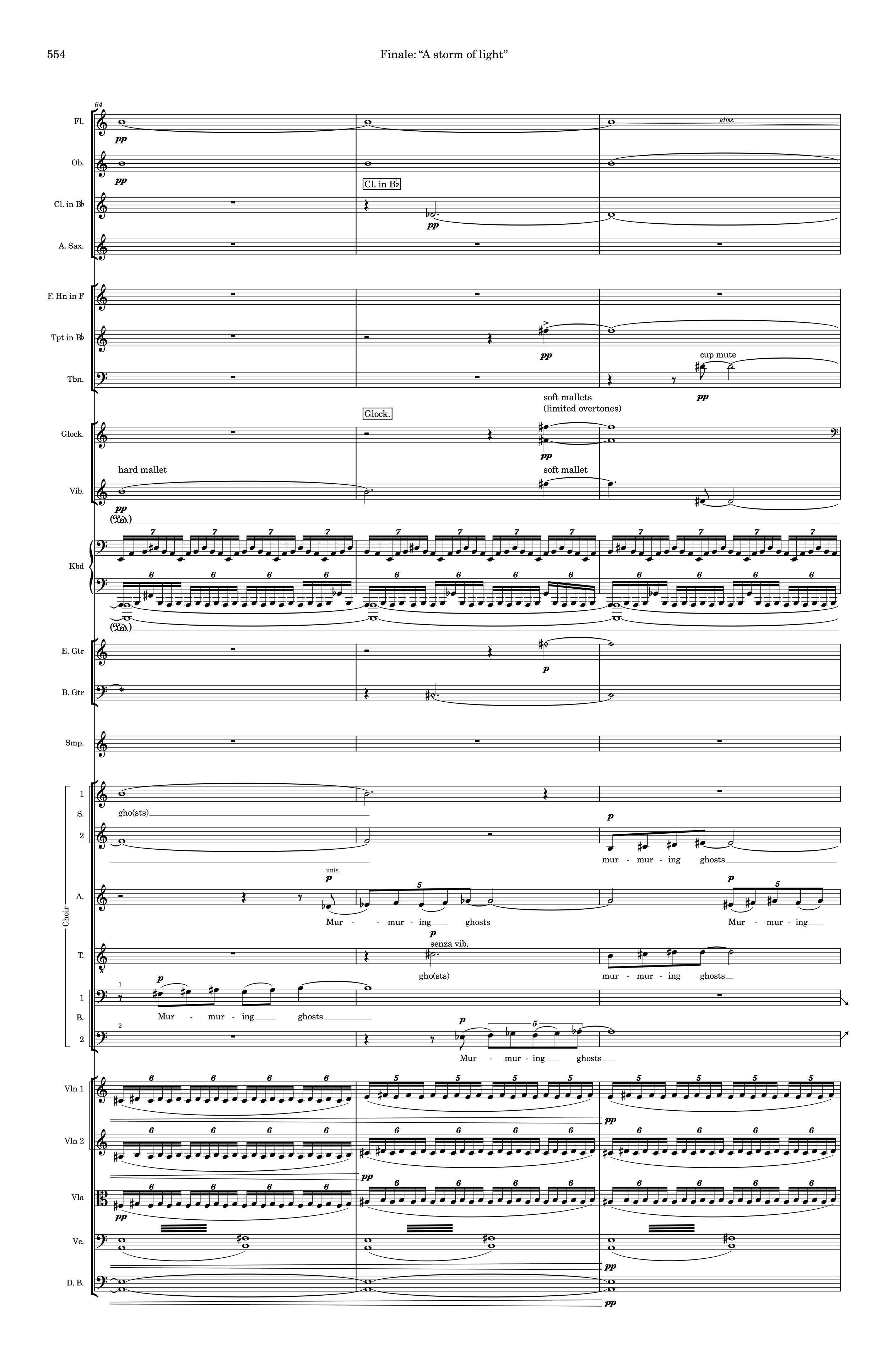
Included excerpts: scenes four and five of act three.
Scene IV:
Guy Montag, after killing his captain, runs through the streets towards the river at the edge of the city, as television broadcasts track and update the search for his whereabouts. As he runs, he sees the news snippets through the windows of homes, as the chase that could take his life is turned into a grotesque sport. These broadcasts are interrupted by garish advertisements, which in turn are interrupted by Clarisse, appearing as a memory, musing on the incessant commercialism, and breakneck pace of life in the modern world. Montag makes it to the river by the skin of his teeth, as the announcer encourages everyone in the city to look out their windows simultaneously – which would all but ensure Montag’s capture.
CLARISSE.
Did you know that once billboards were only twenty feet long, instead of two-hundred? But cars started rushing by so quickly they had to stretch the advertising out so it would last.
Sometimes I think drivers don't know what grass is, or flowers, because they never see them slowly. If you showed a driver a green blur, Oh yes! he'd say, that's grass! A pink blur? That's a rose-garden! White blurs are houses. Brown blurs are cows.
My uncle drove slowly on a highway once. He drove forty miles an hour and they jailed him for two days. Isn't that funny, and sad, too?
Scene V:
Choral finale: Montag has waded into the river, and follows it out of the city – his exact fate is unknown.
CHOIR.
A storm of light falls upon the river
like the sun breaking through the clouds
and plunging into the darkness.
You dive into the darkness;
the river pulls you on its way;
the lights switch back to the land
and follow another trail.
You follow the stars,
the great processions of wheeling fire.
The black land slides by:
you leave behind a city.
You leave behind a stage
And many actors, murmuring ghosts:
You leave behind an unreality.
You move into a reality, unreal as it is new:
a great juggernaut of stars forming in the sky,
threatening to roll over and crush you.
You leave behind a city.
You leave behind a seance.